


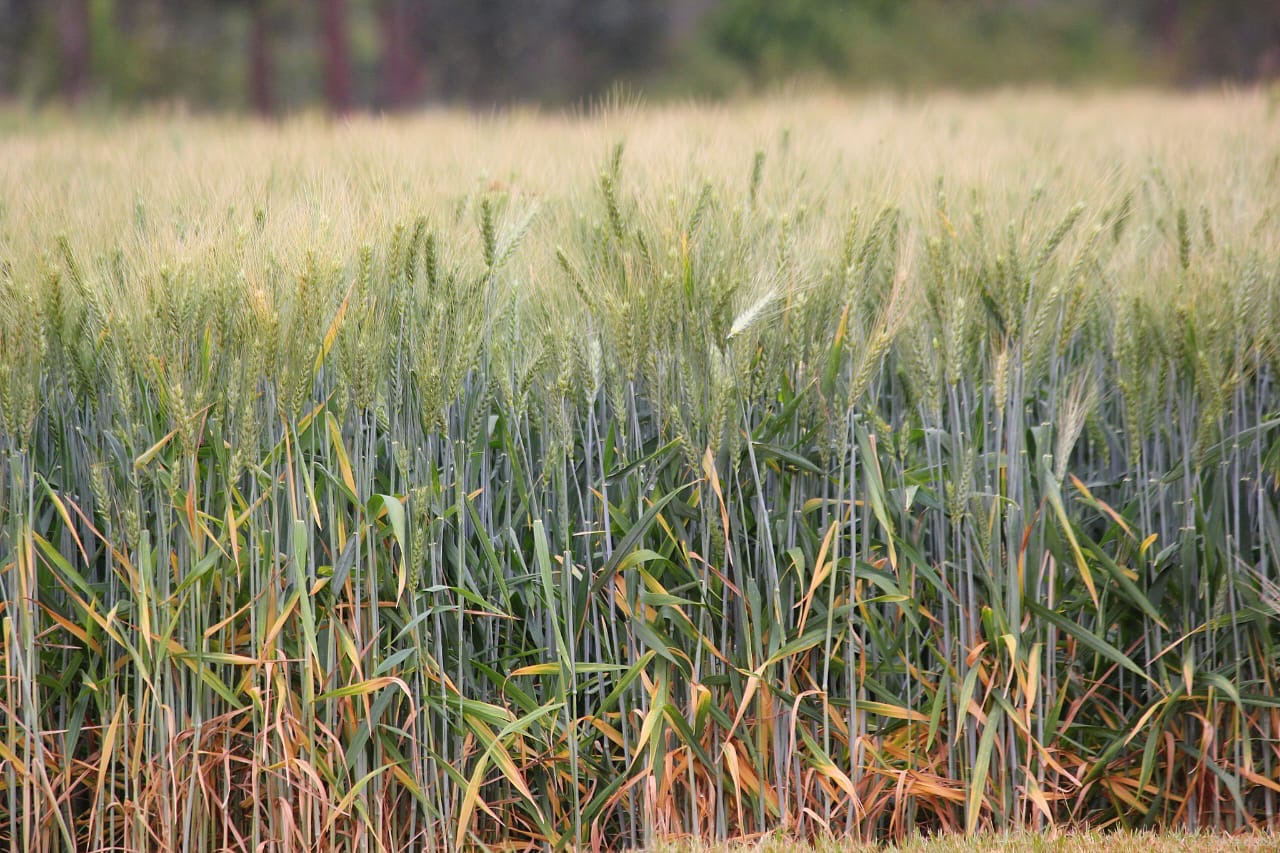
SHAMVA — Seed Co has launched SCW9104, a new white flour wheat variety bred specifically to withstand warmer winters, evolving disease strains, and the climatic volatility expected under the anticipated El Niño event.
But as Zimbabwe braces for a season forecast to bring below-normal rainfall and prolonged dry spells, a critical question remains unanswered: will SCW9104 hold up when temperatures exceed the very tolerances it was designed for?
The variety was unveiled at the inaugural Seed Co Wheat Field Day at Rattray Arnold Research Station (RARS) in Shamva, under the theme "SCW9104: Growing Zimbabwe's Wheat Future – Driving Economic Growth and Food Security."
Bred for a warmer climate
Unlike existing varieties, SCW9104 was developed with resilience to warmer winters and environmental variability as a central design feature — a direct response to the changing climatic conditions now facing Zimbabwean wheat producers.

The variety carries strong tolerance to rust diseases, including yellow or stripe rust, which have threatened yields in recent seasons, alongside a yield potential of around 10.5 tonnes per hectare, high protein content above 13 percent, and white flour colour.
At the launch, Permanent Secretary in the Ministry of Agriculture, Mechanisation and Water Resources Development, Professor Dr Obert Jiri, said modern wheat breeding must answer several climate-related questions at once — how much can be produced, how resilient the variety is, and how it performs under local conditions.
"The significance of SCW9104 goes beyond field performance to end-use quality," Prof Jiri said. "Millers and bakers require acceptable and consistent milling and baking quality. Consumers have preferences, including white flour colour."
The El Niño test
SCW9104 was bred for warmth and disease pressure. But Government's own climate outlook warns of below-normal rainfall and above-normal temperatures, with October to December expected to be particularly dry.
The question is whether SCW9104's heat tolerance margins are wide enough to withstand a Super El Niño event — and whether farmers planting it this season are prepared for the risk if they are not.
Prof Jiri said Government was moving from reaction to preparedness, activating a six-pillar mitigation strategy ahead of the season.

"Our six-pillar mitigation strategy is built around strengthening strategic grain reserves; accelerating climate-smart and climate-proof production; strengthening agricultural financing; protecting livestock and water resources; facilitating strategic imports where necessary; and strengthening coordination, early warning, communication and farmer capacity building," he said.
He called on farmers to prepare early, follow seasonal advisories, select varieties suited to their agro-ecological conditions, conserve water, and manage production risks carefully.
But he did not say what happens if SCW9104 fails under heat stress, or whether backup varieties exist.
Farmer profit — or farmer risk?
Seed Co Managing Director Mrs Felistus Ndawi-Gurajena said the next chapter of Zimbabwe's wheat journey must be about more than tonnes produced.
"It must be about the economics behind every tonne: productivity per hectare, quality, efficiency, resilience, market acceptance and ultimately the farmer's return on investment," she said.
She said when a farmer makes more from every hectare, the benefits move beyond the farm to millers, bakers, input suppliers, transporters, agro-dealers, processors, and the wider economy.
But if SCW9104 underperforms under extreme heat, that investment — and that return — could be lost.
What happens next
Both speakers encouraged farmers to engage with Seed Co scientists and agronomists, examine the crop, compare performance, and share their own experiences.
"A variety only creates value when it performs in the hands of farmers. This is why field days such as today's are so important," Ndawi-Gurajena said.
The launch comes as Zimbabwe's wheat sector aims to sustain production momentum in the face of a potentially challenging season, with climate-resilient varieties expected to play a central role in protecting national food security.
But the heat test is only just beginning — and the answer will be found not on the research station, but in the fields where farmers are about to plant.
---